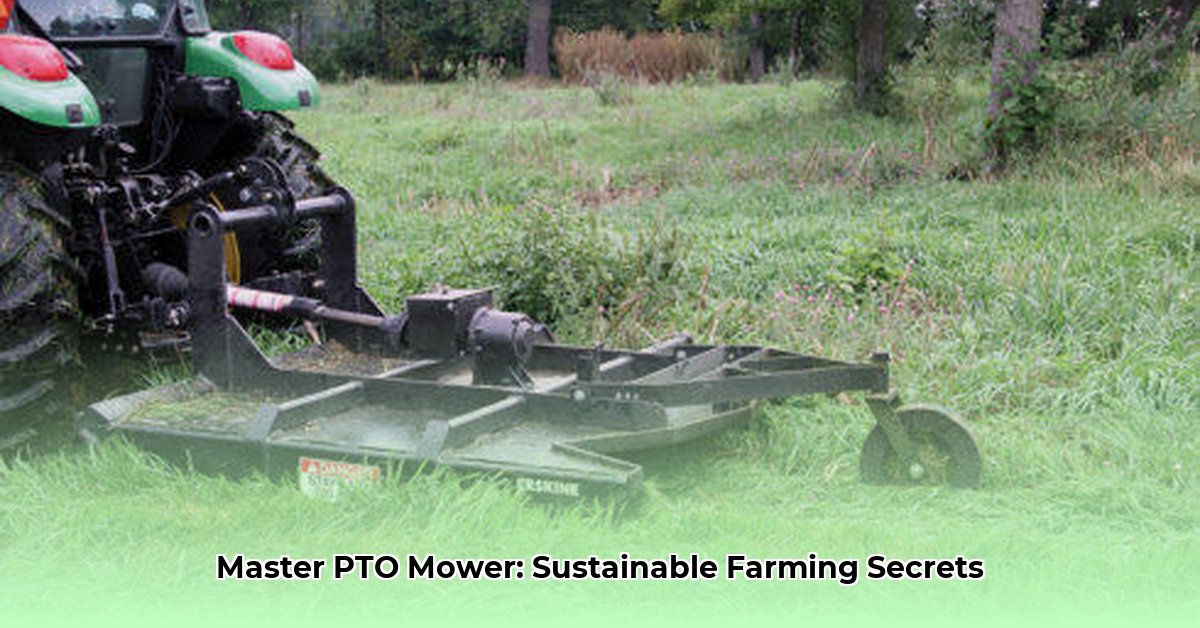
Choosing the right tractor PTO (power take-off) mower is a critical decision for any farmer, impacting efficiency, profitability, and environmental sustainability. This guide provides actionable information to help you select, operate, and maintain a PTO mower effectively. For more information on specialized mowing equipment, check out these brush hog options.
Selecting the Right PTO Mower
The ideal PTO mower depends on several factors:
Farm Size: Smaller farms benefit from compact mowers; larger operations need more robust models. A 60-acre farm, for instance, might require a considerably larger and more powerful mower than a 5-acre plot.
Terrain: Rolling hills necessitate mowers designed for uneven terrain, unlike flat fields where rotary mowers often suffice. Flail mowers, with their flexible flails, are better suited for rocky or uneven land, while rotary mowers are more efficient for smooth surfaces.
Vegetation: Thick brush requires a powerful flail mower, while lighter vegetation can be handled efficiently by a rotary mower. The desired cut also matters – a neat finish requires different equipment than a simple clearing.
Budget: Consider the initial cost, fuel consumption, maintenance, and potential repairs. A higher initial investment in a durable mower might save money long-term through reduced repair costs. Do the math to determine the most cost-effective option over your timeframe.
Rotary vs. Flail Mowers: A Detailed Comparison
Two popular types dominate the market:
Rotary Mowers: Versatile, relatively inexpensive, and suitable for various vegetation types on relatively flat land. Maintenance is primarily blade sharpening.
Flail Mowers: Built for tougher conditions, ideal for uneven terrain and dense vegetation. They are more expensive initially and require more complex maintenance.
What is the most impactful factor influencing your choice between a rotary and flail mower? It's likely the terrain and type of vegetation you'll be working with.
Safe Operation: A Non-Negotiable Priority
Safety is paramount. Follow these steps before each use:
Pre-operation Inspection: Check for loose parts and damage. Addressing minor issues early prevents serious accidents.
Safe PTO Engagement/Disengagement: Always disengage the PTO before mounting or dismounting the tractor, and before making any adjustments. This is crucial for preventing injuries.
Area Clearance: Thoroughly inspect the area for obstacles to avoid damage and injury.
Appropriate Speed: Adjust speed based on terrain and vegetation. Slower speeds are safer, especially in challenging conditions.
Visibility: Ensure clear visibility before operation.
Personal Protective Equipment (PPE): Always wear safety glasses, hearing protection, and sturdy work boots. Gloves are also advisable.
Regular PTO Shaft Checks: Regularly inspect the PTO shaft for wear and tear and replace as needed. A damaged PTO shaft is a major safety hazard.
Essential Maintenance: Extending Mower Lifespan
Regular maintenance is key to a mower's longevity and performance.
Blade Sharpening: Sharpen blades frequently to ensure clean cuts and prevent damage to the mower. Dull blades significantly reduce efficiency.
Lubrication: Keep moving parts lubricated according to manufacturer recommendations to prevent wear.
Cleaning: Remove grass clippings and debris after each use.
Regular Inspections: Conduct frequent inspections for wear and tear, addressing minor issues promptly.
Record Keeping: Keeps records of maintenance and repairs for future reference.
Sustainability and Economics: The Big Picture
Your mower choice has significant environmental and economic implications.
Fuel Efficiency: Diesel mowers are traditional but contribute to emissions. Electric options, although expensive upfront, offer long-term fuel savings and reduce carbon footprint. However, their availability is currently limited.
Soil Health: Excessive use of heavy machinery can compact soil. Appropriate mowing techniques and minimizing soil disturbance mitigate this.
Economic Considerations: Analyze the total cost of ownership, including purchase price, fuel, maintenance, and repairs. Weigh long-term cost savings against initial investment. Consider potential government incentives for sustainable agricultural practices.
Troubleshooting Common Problems
- Mower Not Engaging: Check the PTO shaft, clutch, and shear pins.
- Blades Not Spinning: Inspect the PTO clutch and shear pins.
- Uneven Cutting: Check blade alignment and sharpness.
Dr. Emily Carter, Agricultural Engineering Professor at Cornell University, emphasizes the importance of choosing the correct equipment based on site-specific conditions: "Often, farmers over-invest in large or overly powerful equipment, leading to increased fuel consumption and soil compaction. A thorough assessment of your needs is vital for sustainable farming."
Conclusion
Selecting, operating, and maintaining a PTO mower demands careful planning. By prioritizing safety, sustainability, and efficiency, farmers can optimize operations and contribute to a more resilient and environmentally responsible agricultural system.